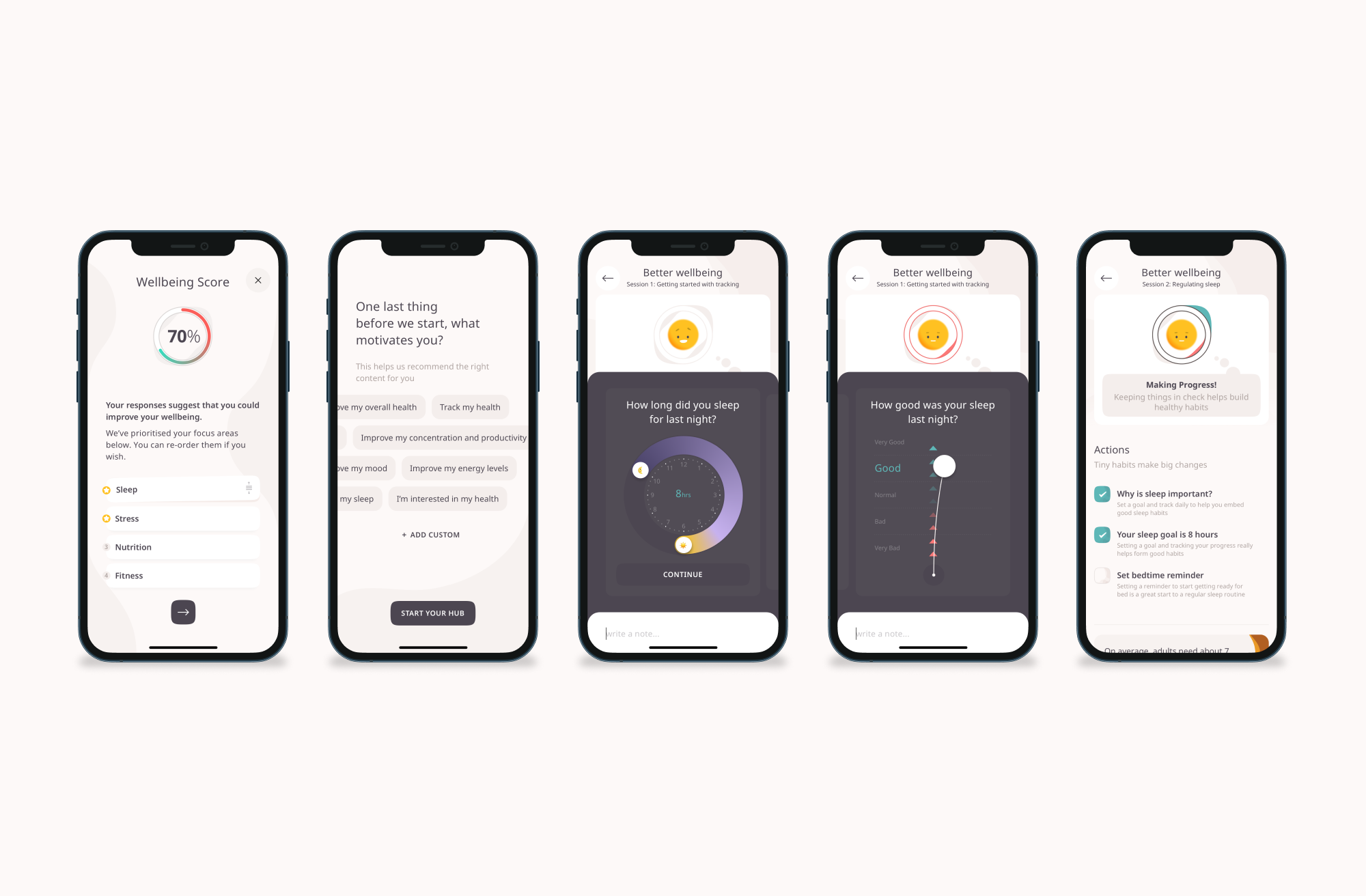
Designing healthier habits
Turning research into a product designed to support lasting behaviour change.

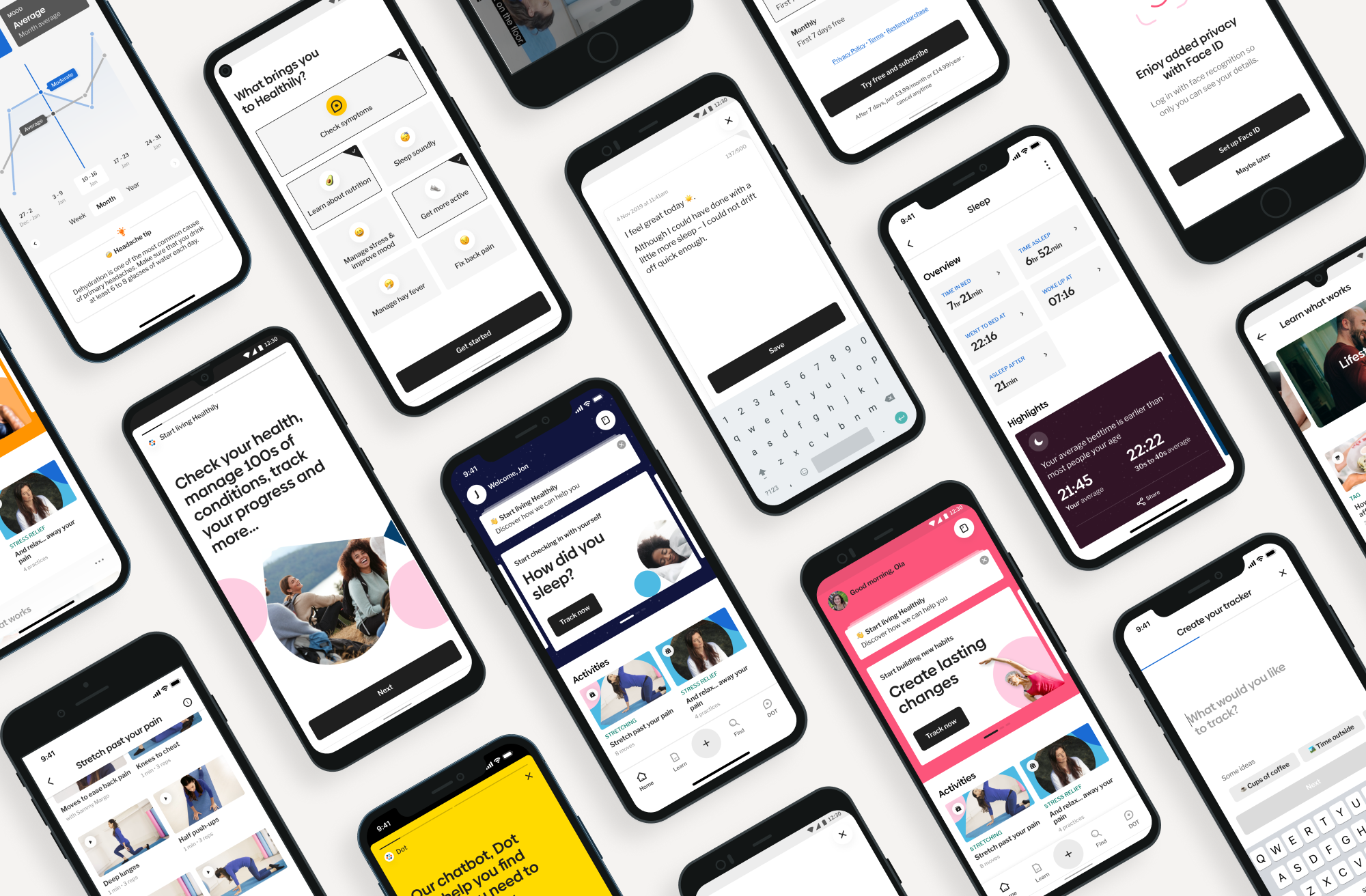
Healthily was evolving from Your.MD, an Android-first symptom checker, into a broader digital health platform designed to help millions of people understand and manage their everyday health.
Over two years, I helped the company navigate that change: building the design team, establishing new ways of working, evolving the product across Android, iOS and web, and translating a new brand into a coherent product experience.
This was not one isolated redesign. It was a period of continuous growth and change spanning brand, product strategy, team structure, design systems and more than 30 product releases.
Your.MD had already built a trusted symptom checker and a large audience for its health information. But the name and product experience increasingly reflected where the company had come from, rather than where it wanted to go.
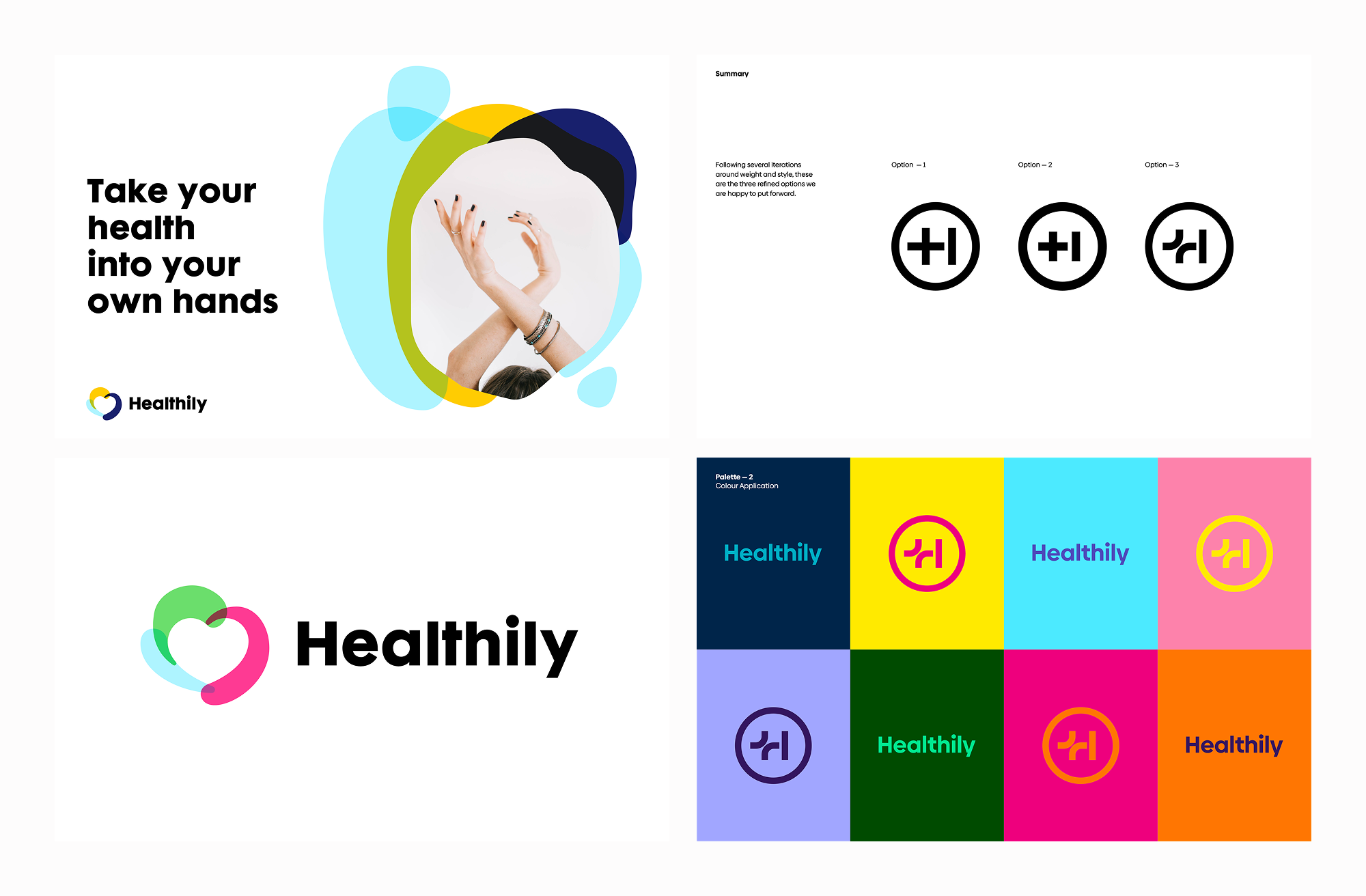
The ambition was to become Healthily: a more approachable, empowering health platform that could support people before, during and after a health concern.
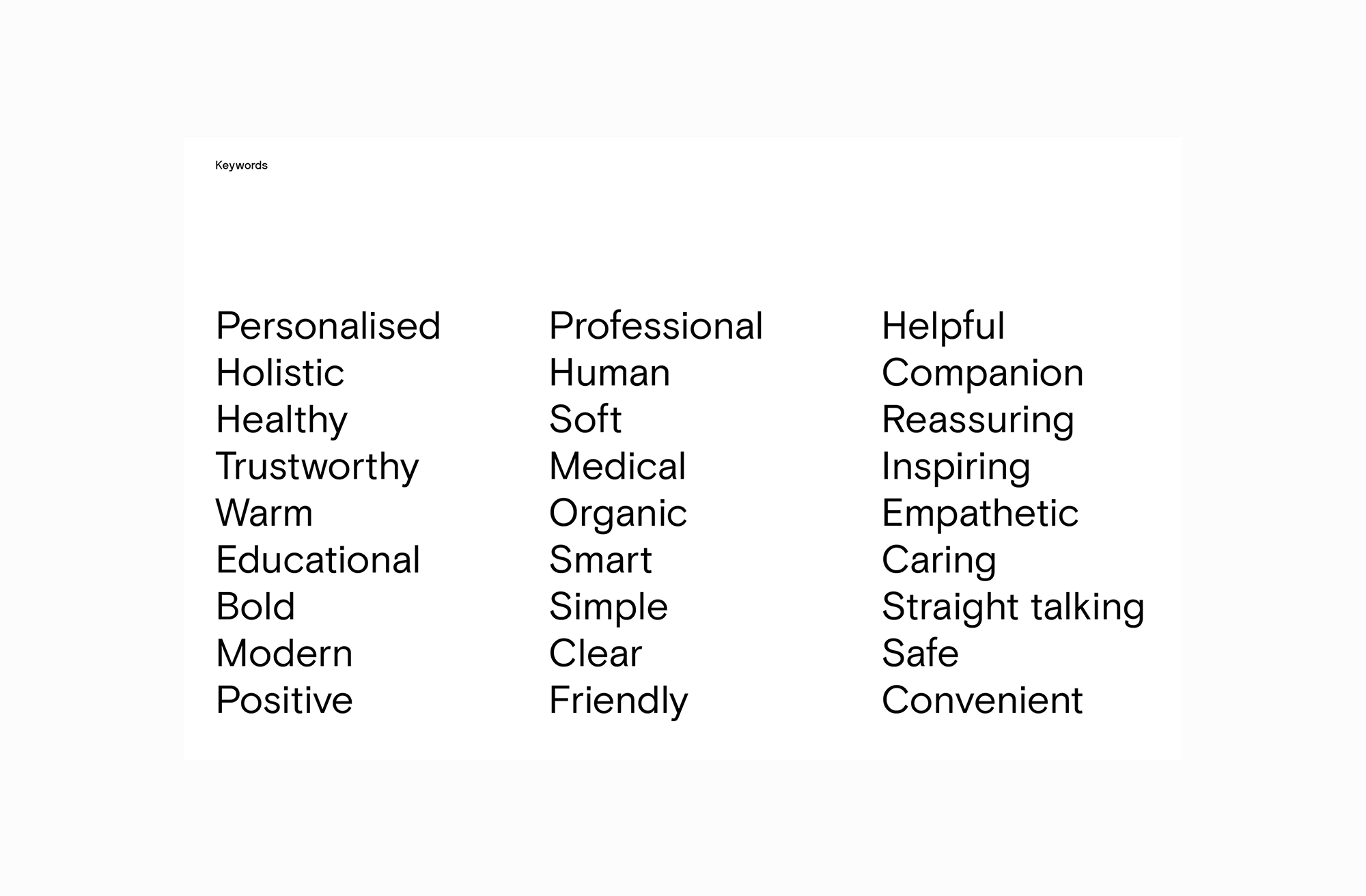
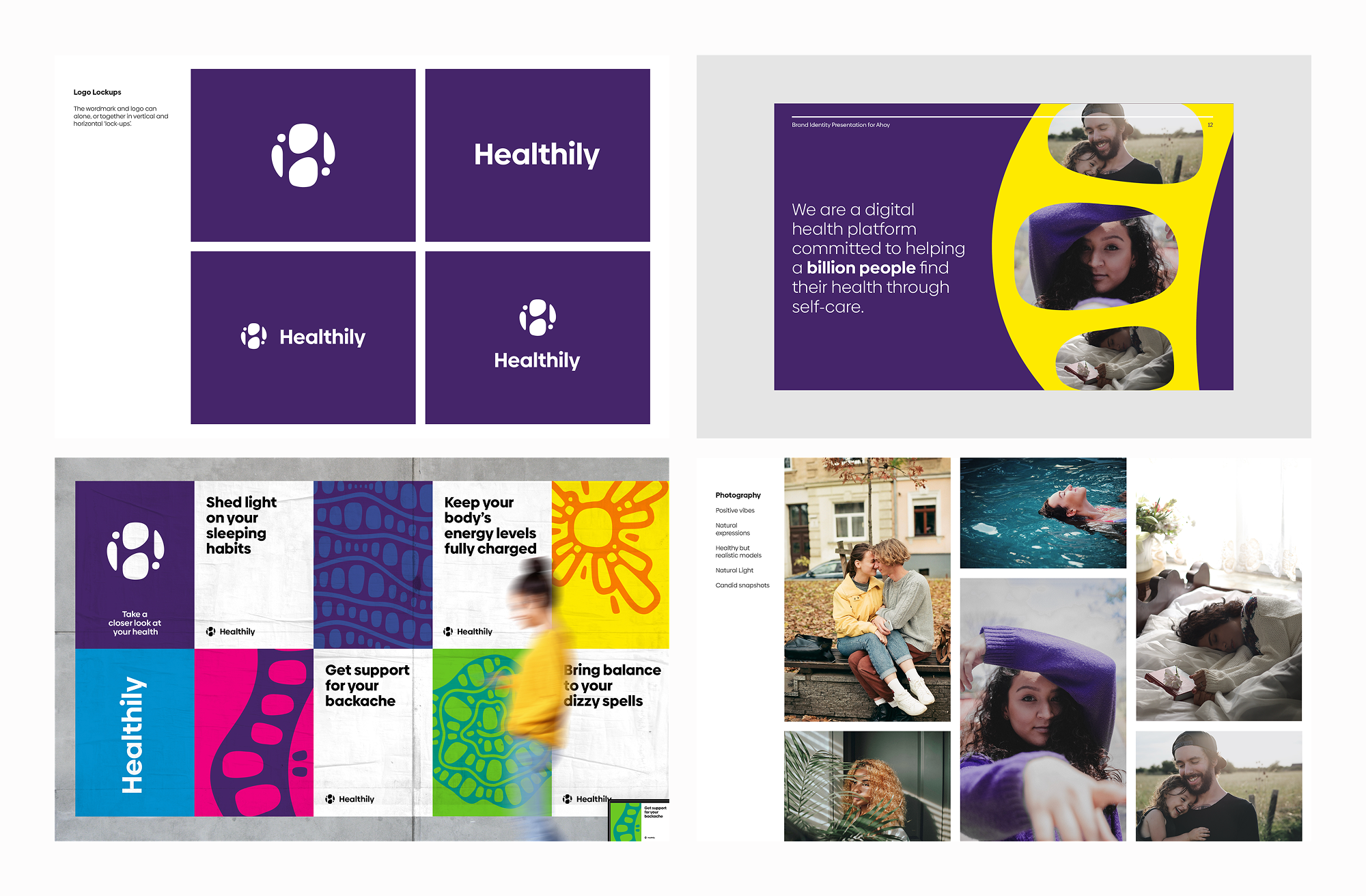
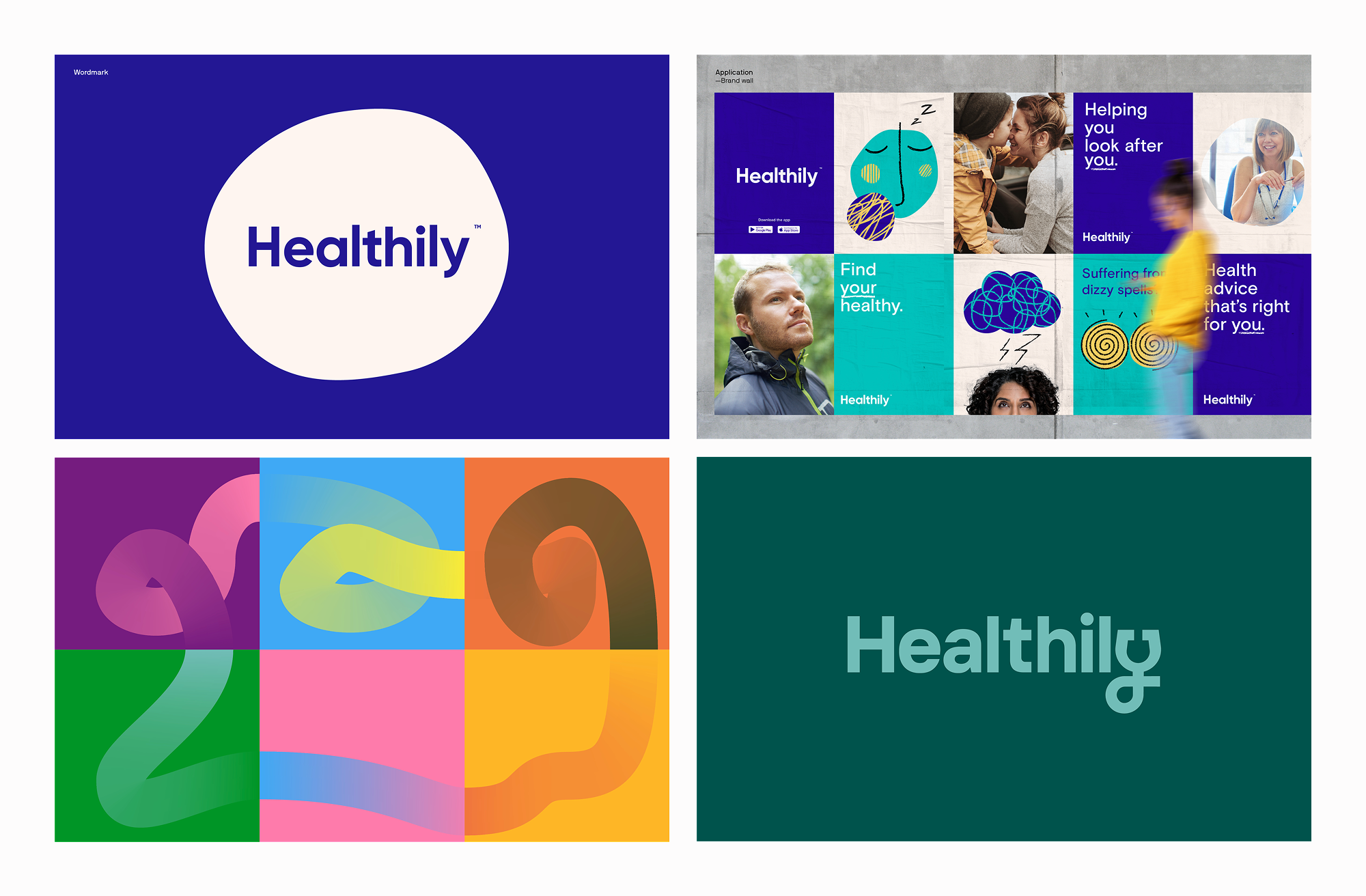
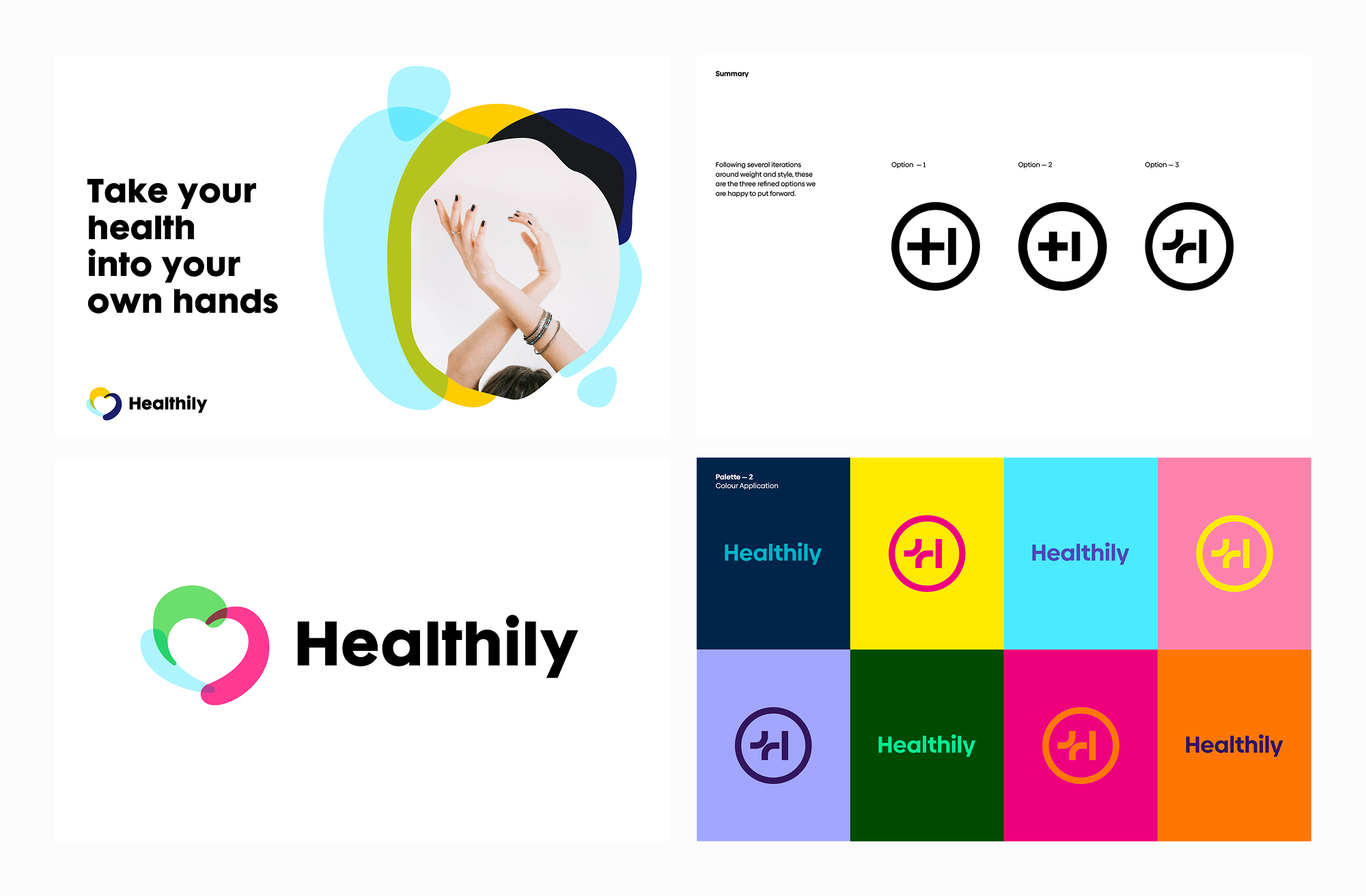
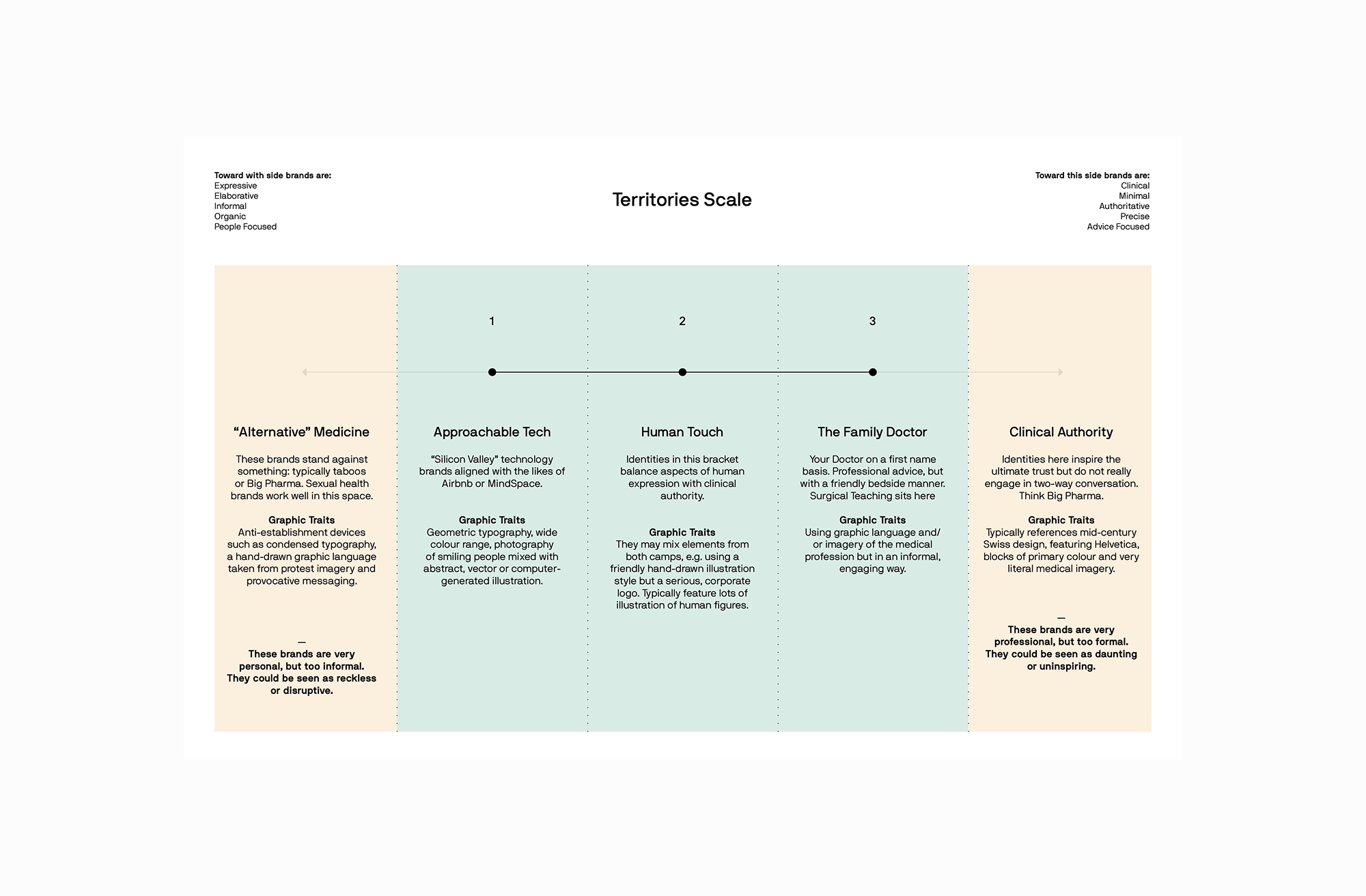
We partnered with AHOY to create the new brand identity. I was the lead product and design stakeholder throughout the process, helping to shape the vision, direct the work and sign off the final identity alongside the executive team.
AHOY developed the brand. Our internal teams were responsible for turning it into a working digital product.
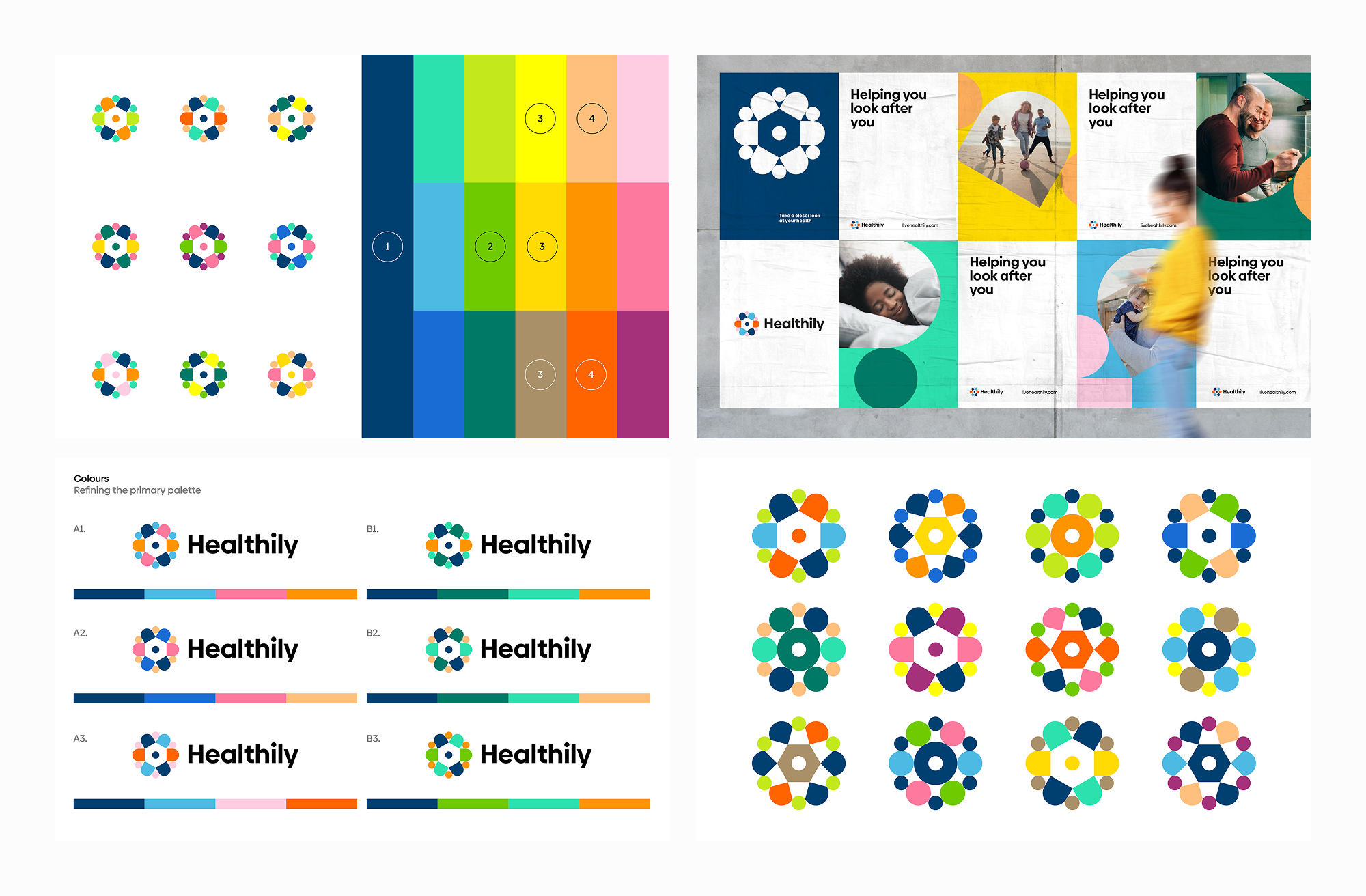
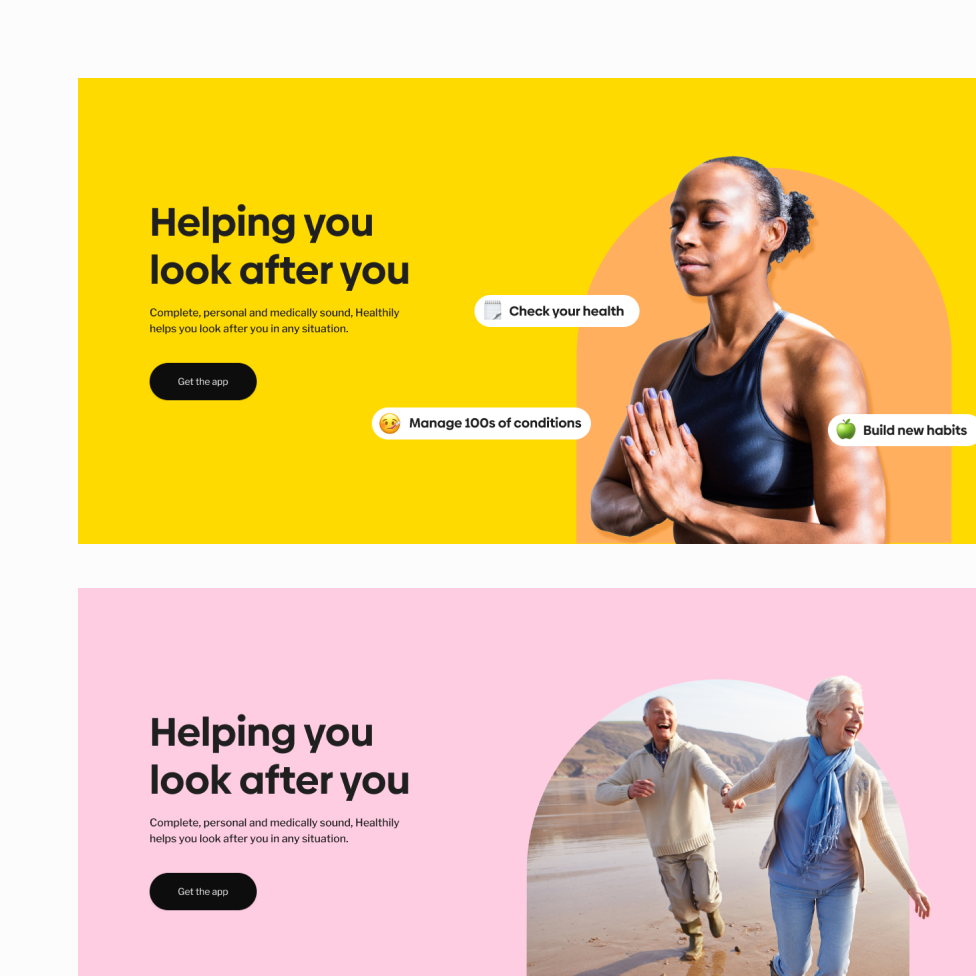
That meant translating the identity across the website, Android and iOS applications, while ensuring it worked within the accessibility, usability and clinical-trust requirements of a health product.
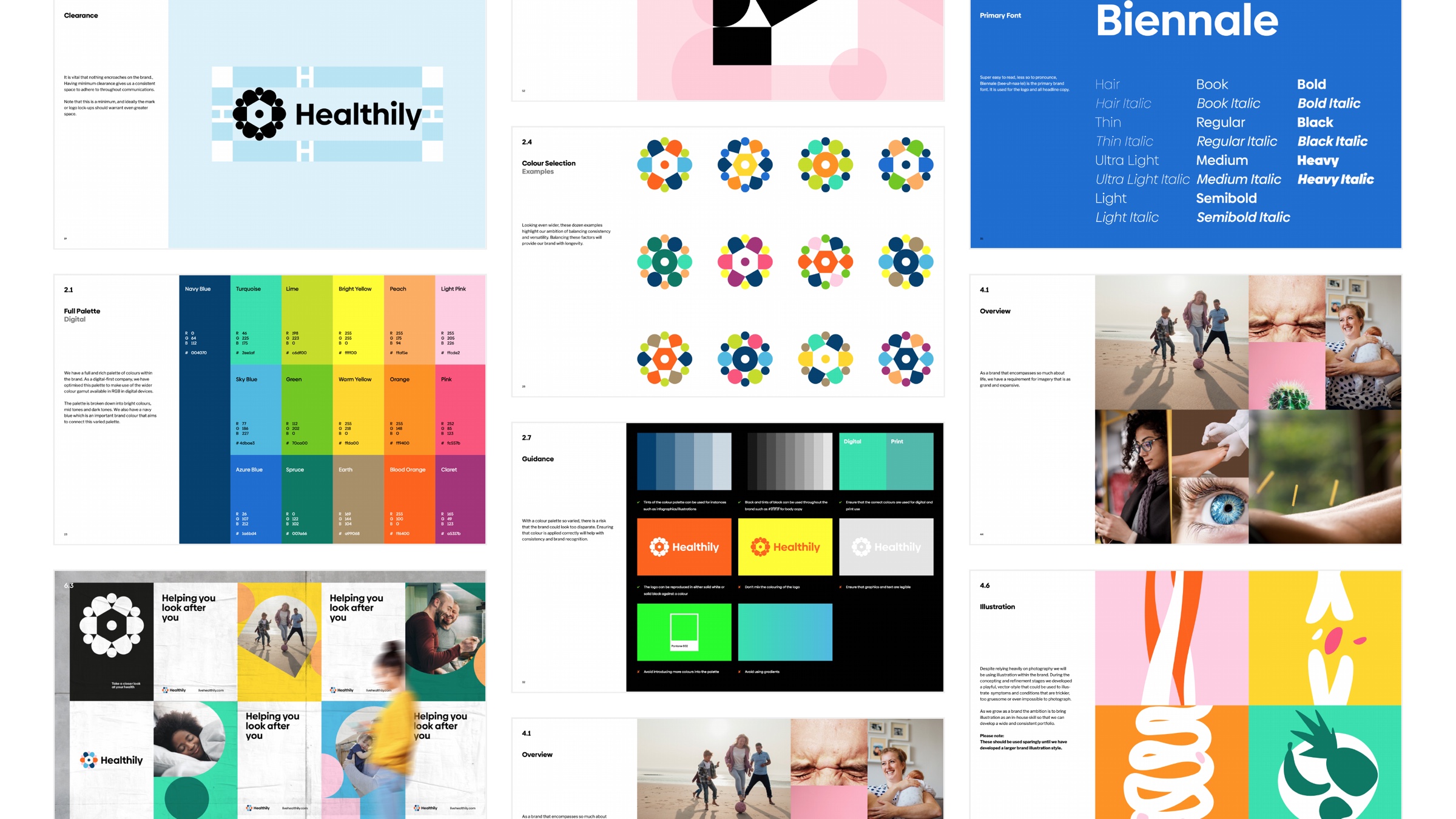
A visual identity does not arrive as a complete product system.
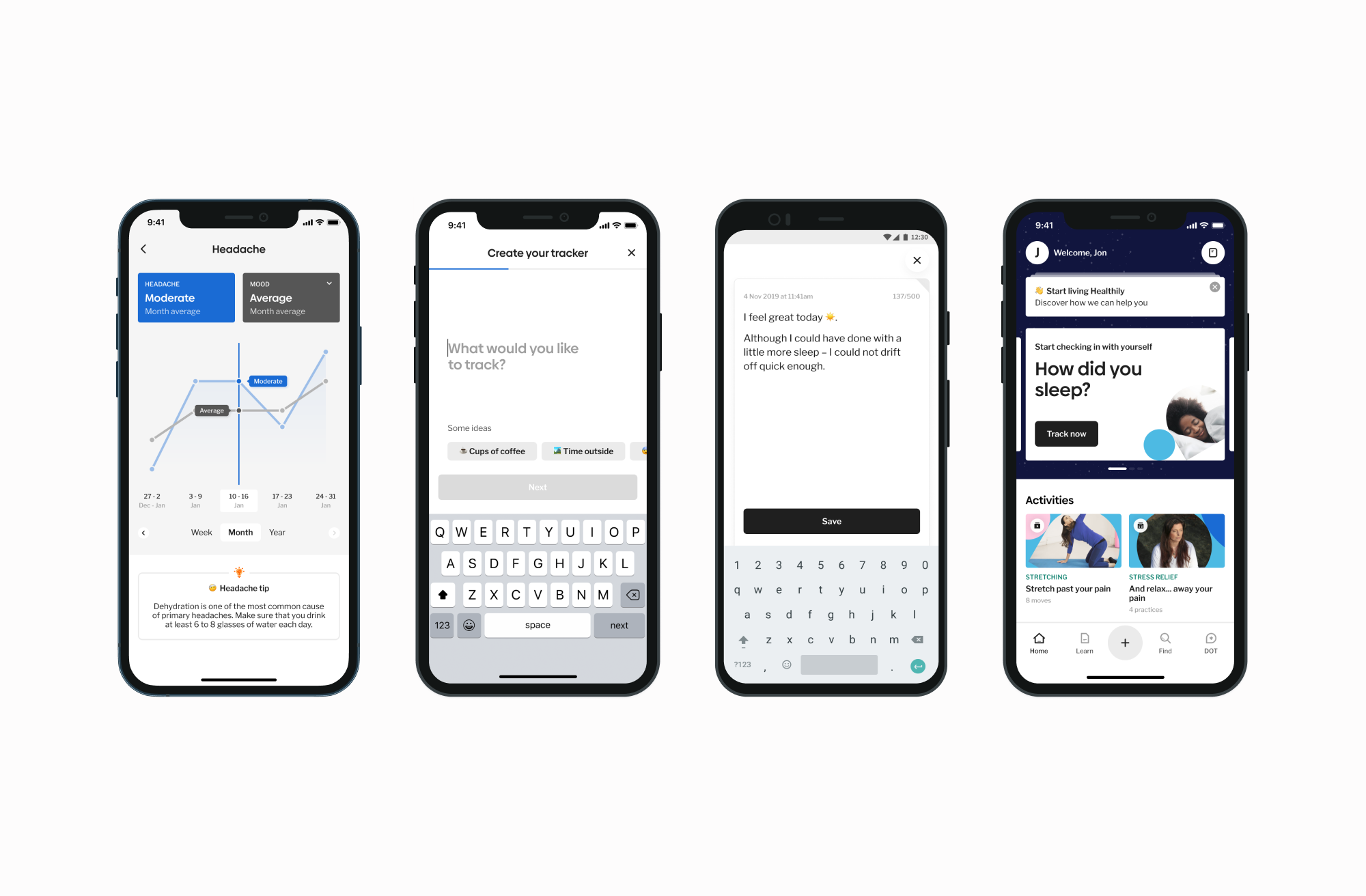
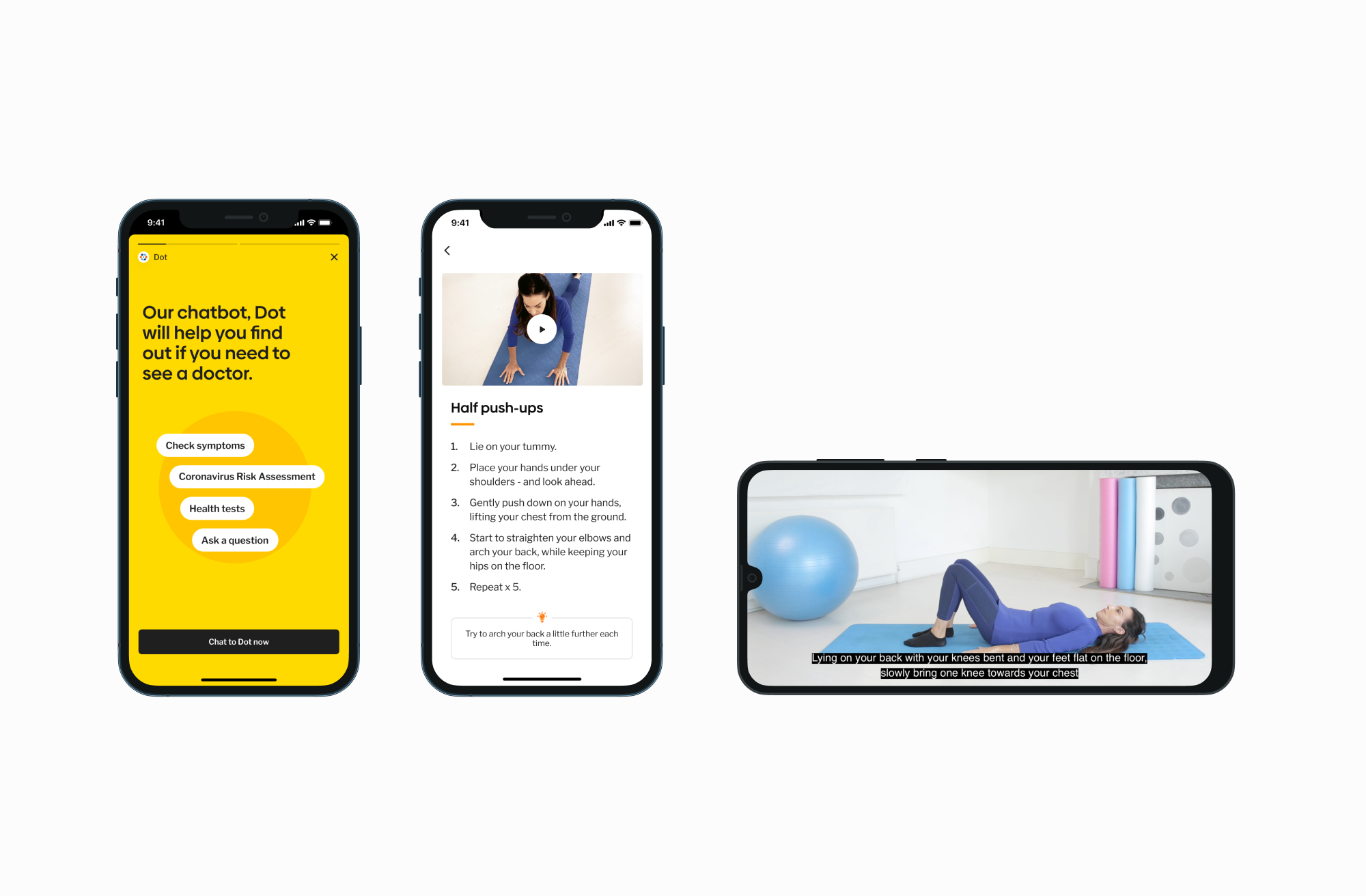
We needed to determine how the new brand behaved across navigation, content, interactions, health assessments, data visualisation and everyday product states. We also needed to introduce it without disrupting millions of existing users or slowing down active product teams.
I directed the internal product rollout while remaining hands-on in the design work. We established shared foundations for typography, colour, spacing, components and interaction patterns, then worked with engineers to embed them into reusable product libraries.
This created consistency across Android, iOS and web while giving teams enough flexibility to solve the specific needs of their products.
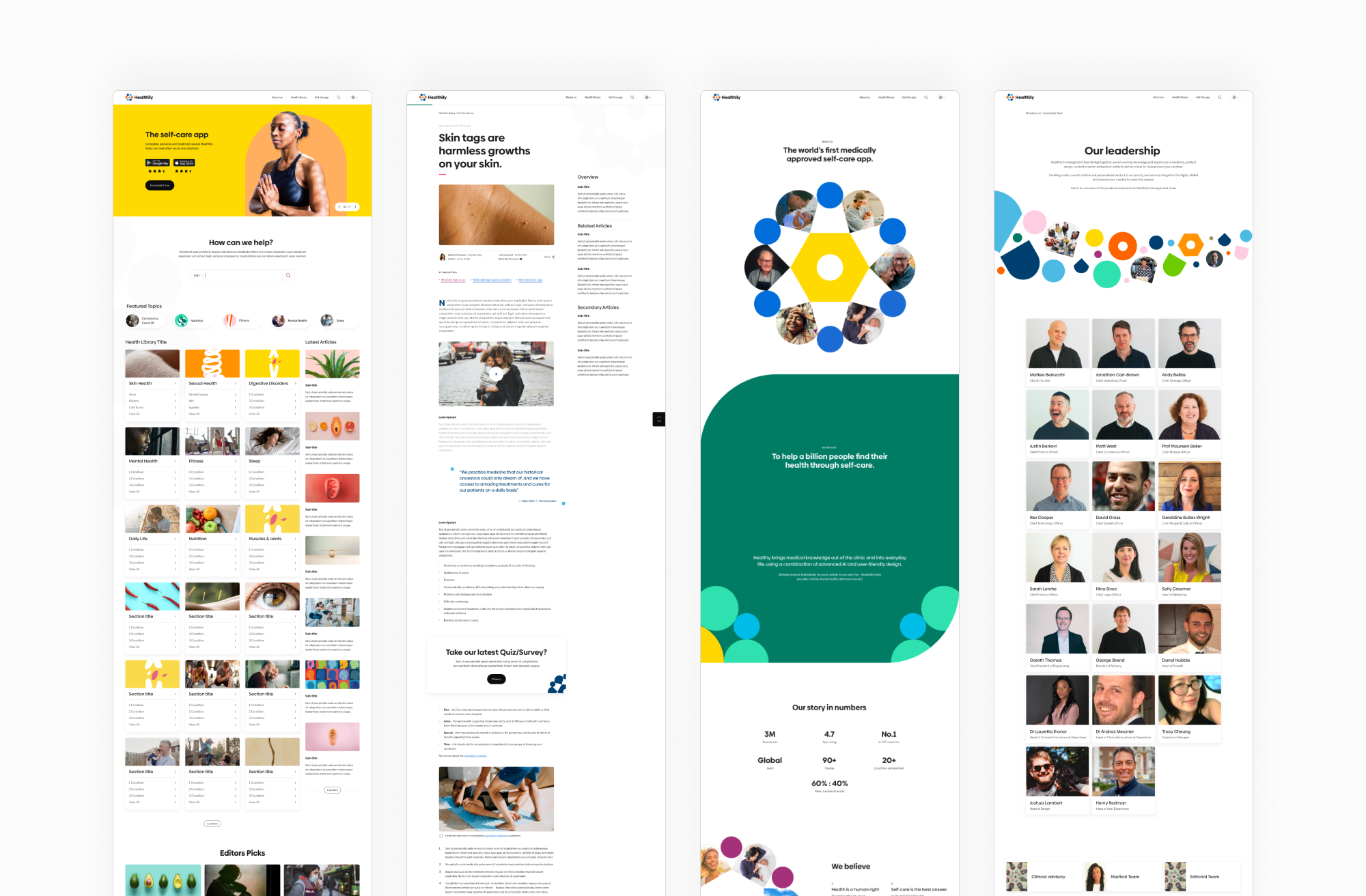
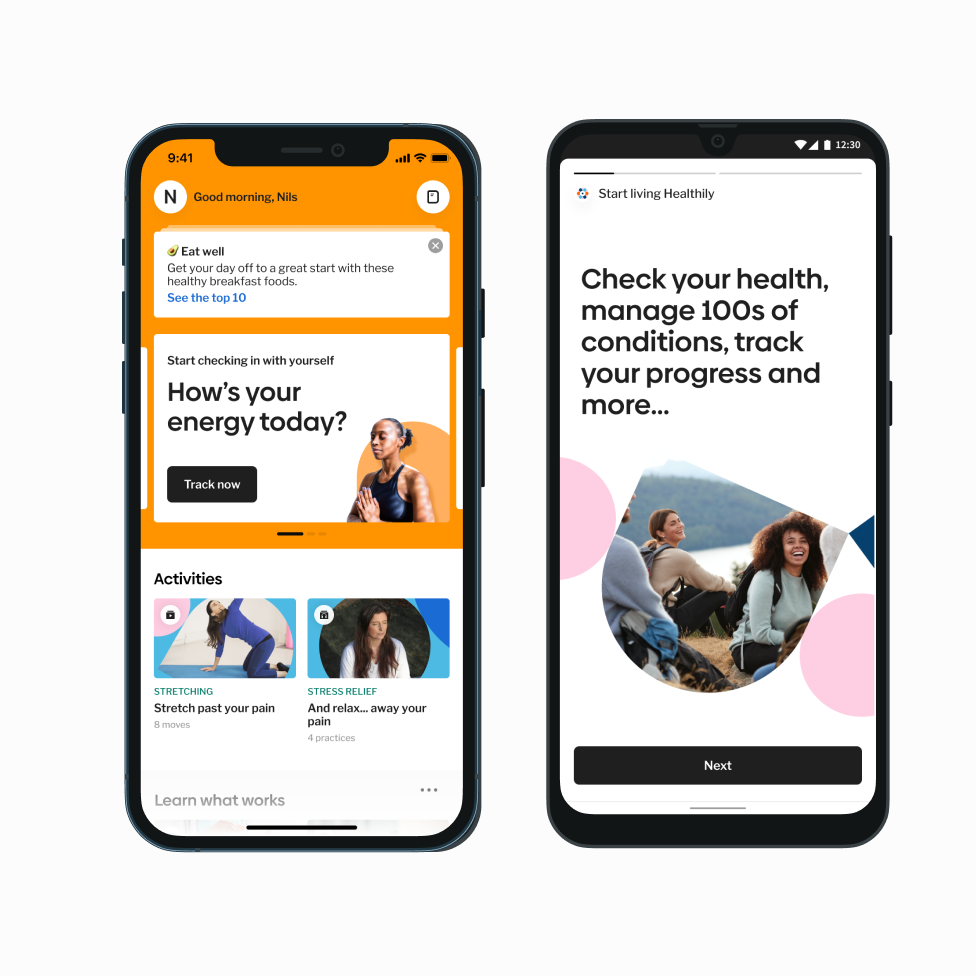
As the product and organisation grew, maintaining quality could no longer depend on one central design team reviewing every decision.
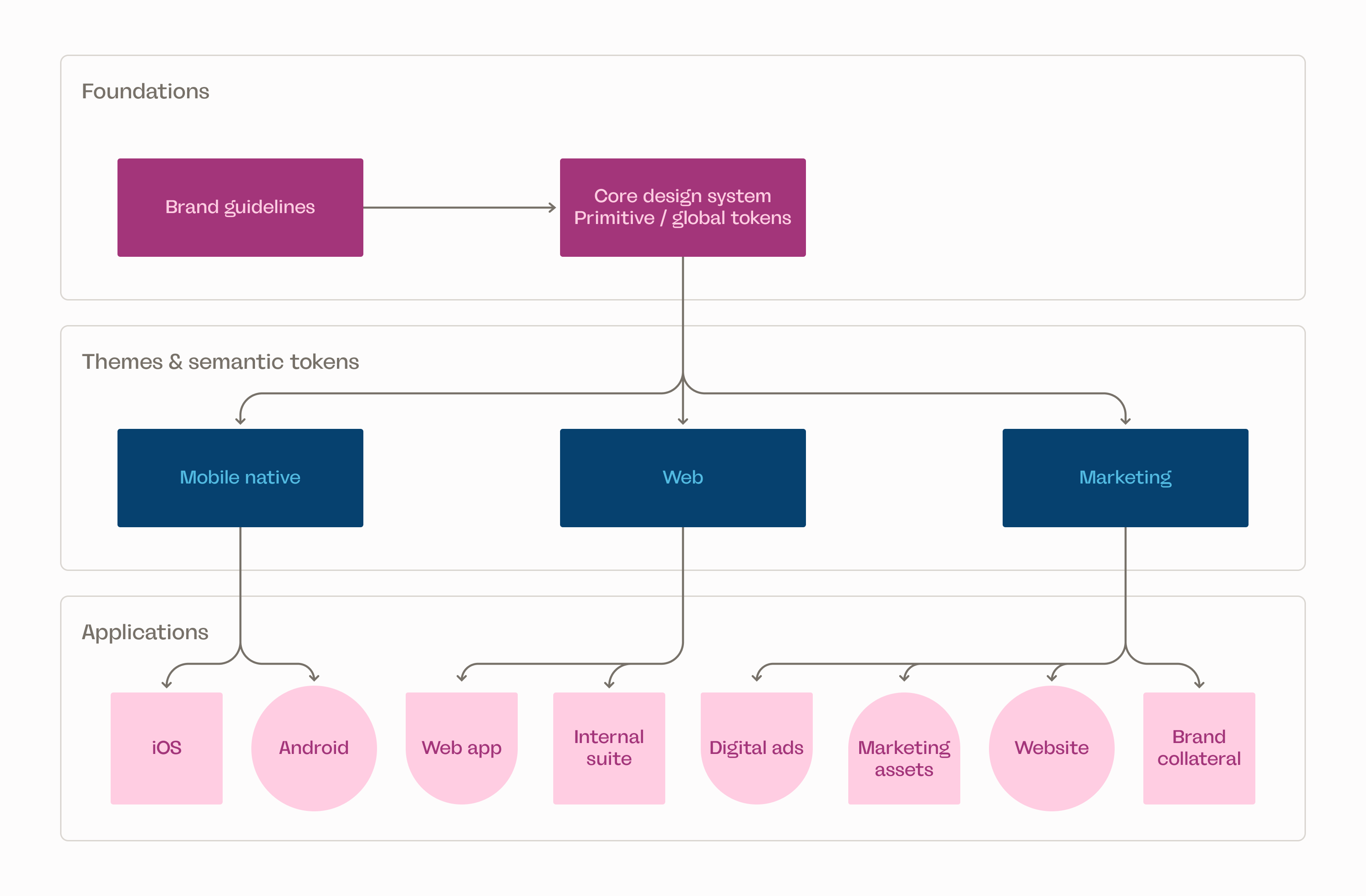
We created a distributed design ecosystem built around four levels: global guidelines that defined the shared principles of the Healthily experience; a product design system containing reusable patterns and behaviours; platform component libraries maintained in partnership with engineering; and product-specific solutions that created space where a shared pattern was not appropriate.
This allowed teams to move faster without every squad solving the same problems independently. It also shifted the design system from being a static library into a shared way of working between design and engineering.
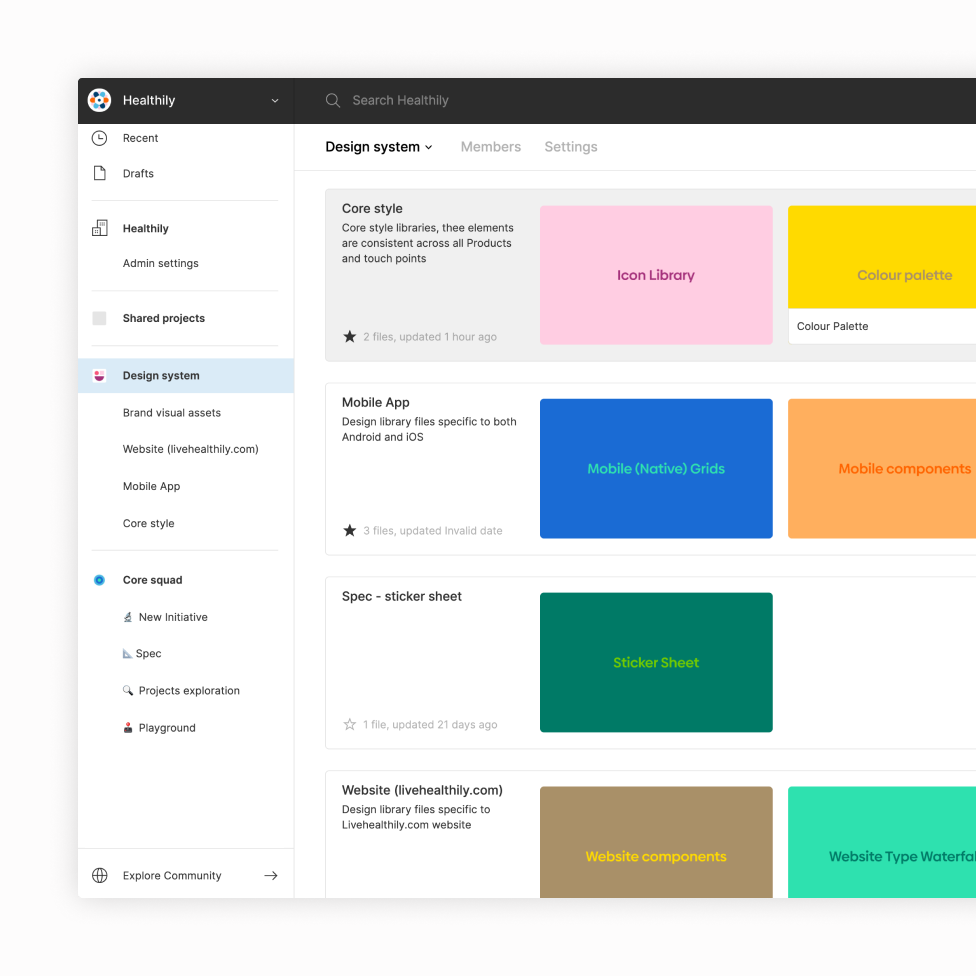
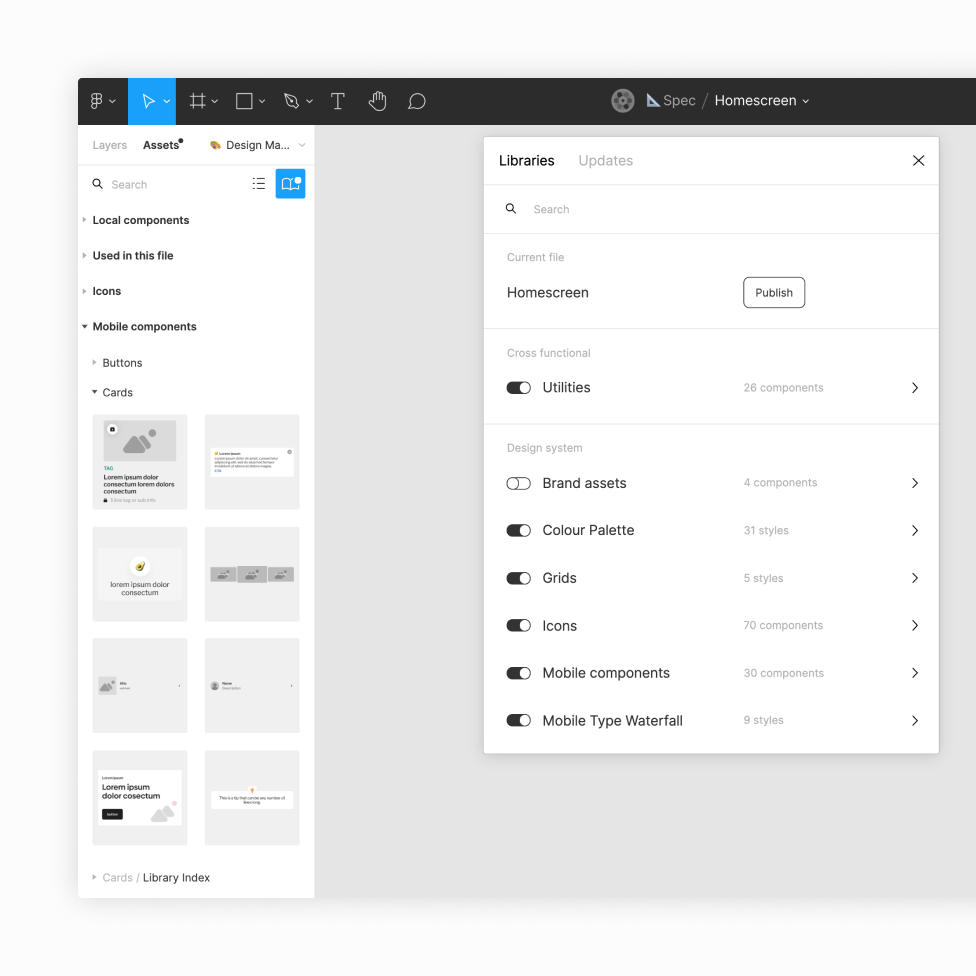
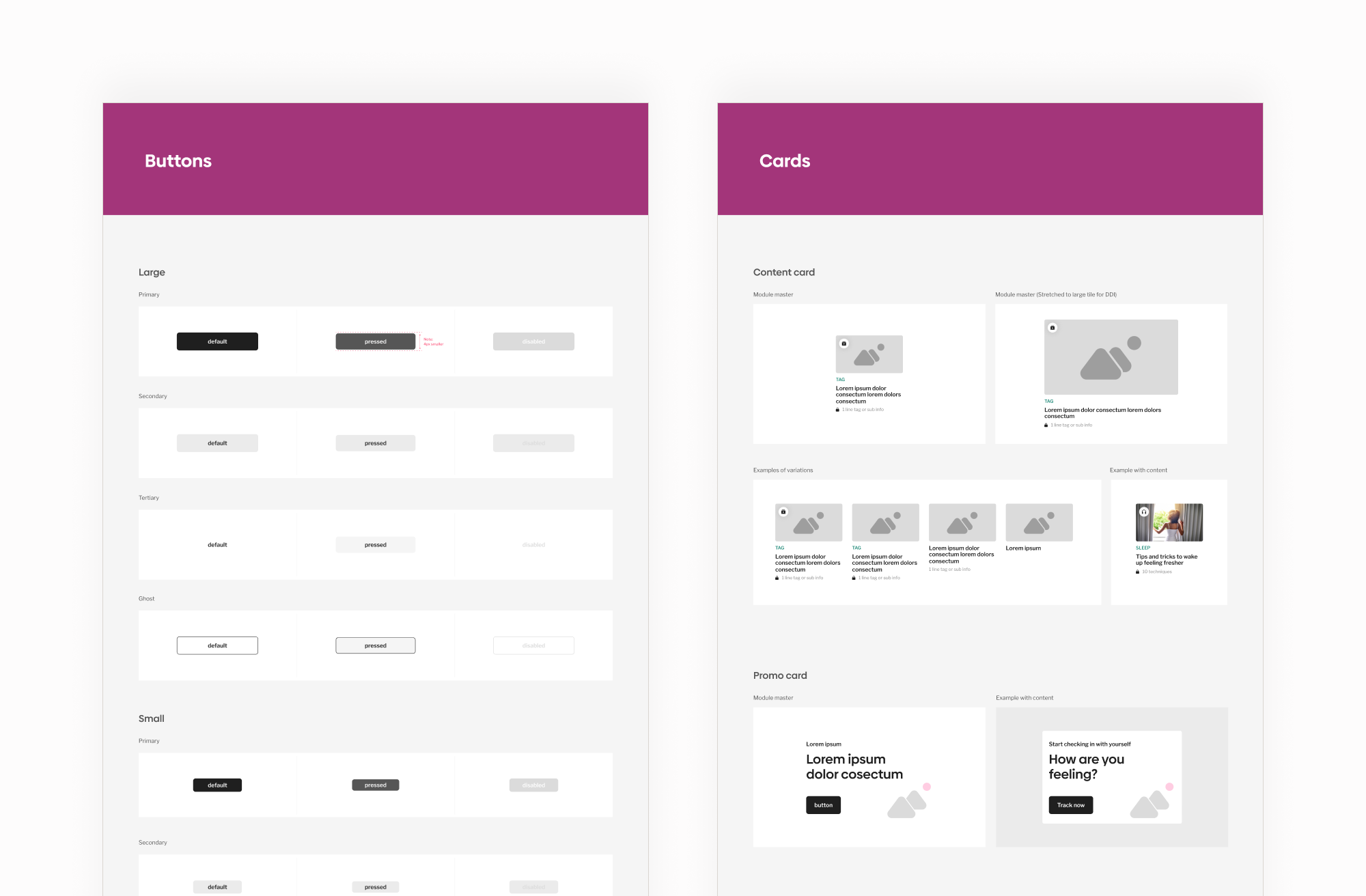
We moved towards cross-functional product squads, each built around a trio of product management, product design and engineering, with a clear area of focus. Teams across the squads contributed to a shared design system of foundations, patterns and components.
I combined design leadership with hands-on product work. I supported designers across squads, facilitated workshops and worked closely with Product, Engineering, Marketing, Medical and the executive team. Shared visual design, motion and illustration specialists supported the squads, alongside colleagues in content design, copywriting, marketing, legal, and data and insights.
Regular design jams connected designers across squads, creating space to critique work, share learning and resolve common challenges. Product roundtables, refinement sessions, user testing and weekly development demos kept this work connected to delivery.
The aim was to give teams the principles, tools and confidence to make decisions themselves, while maintaining a coherent product experience.
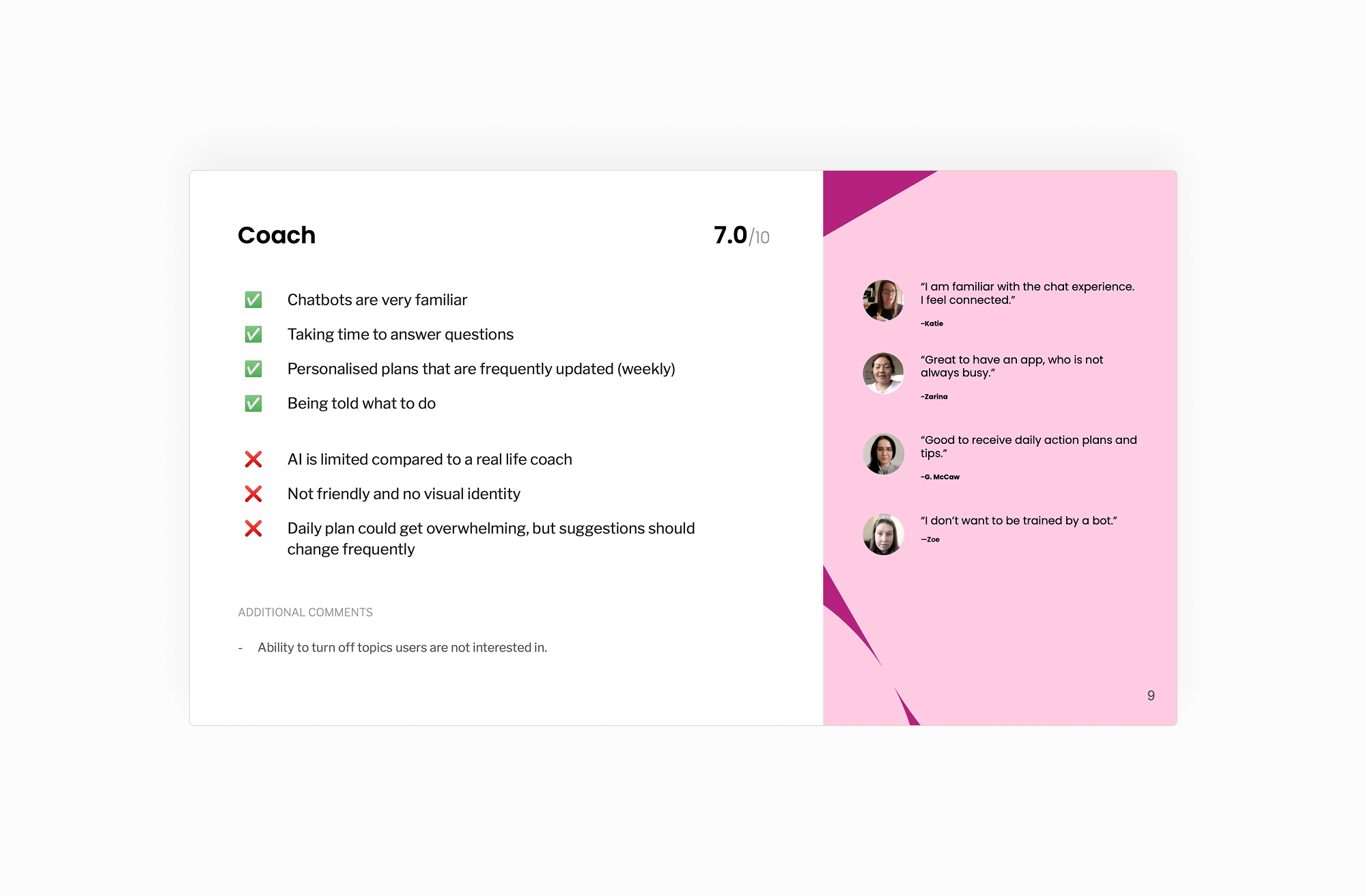
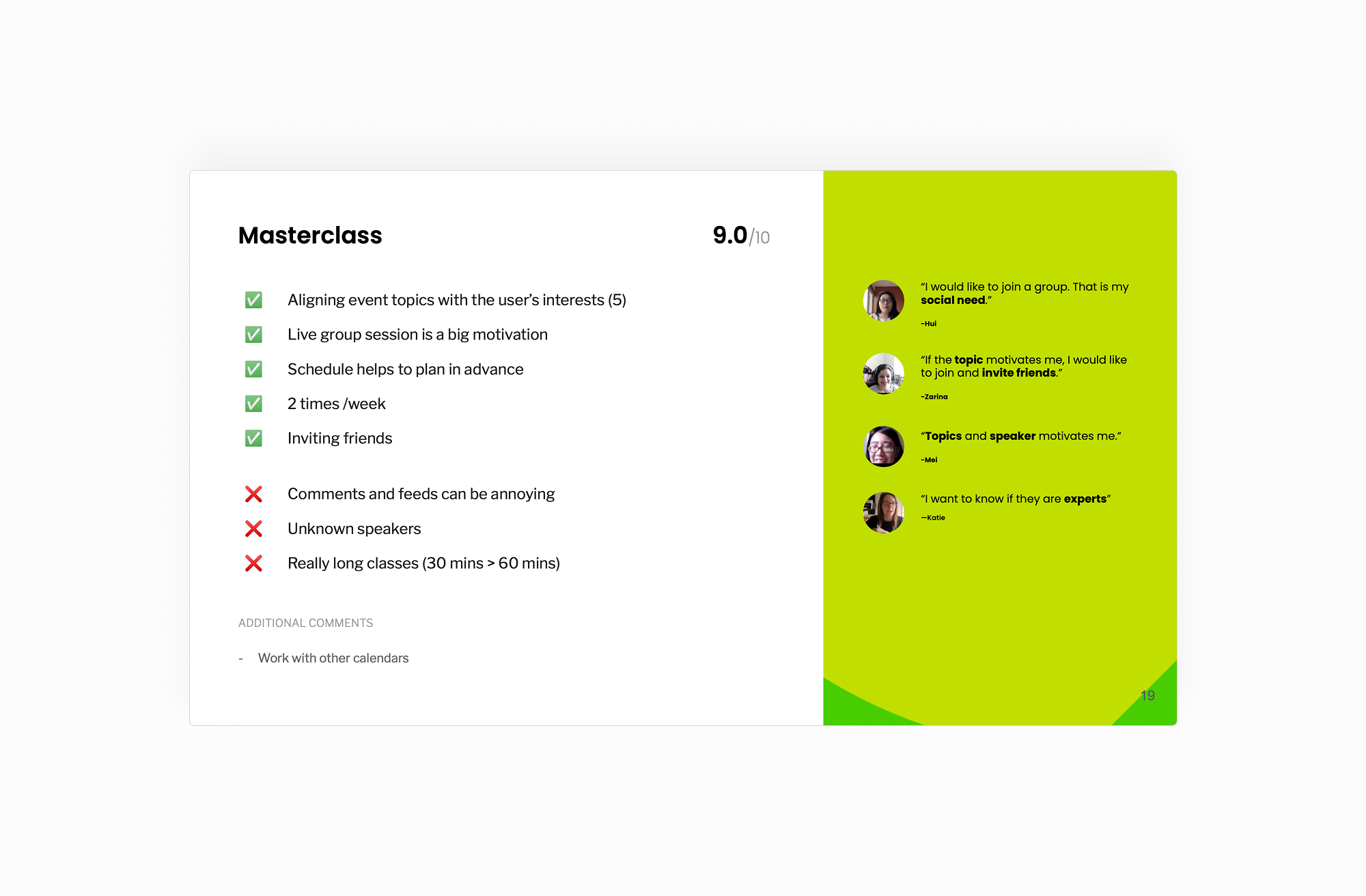
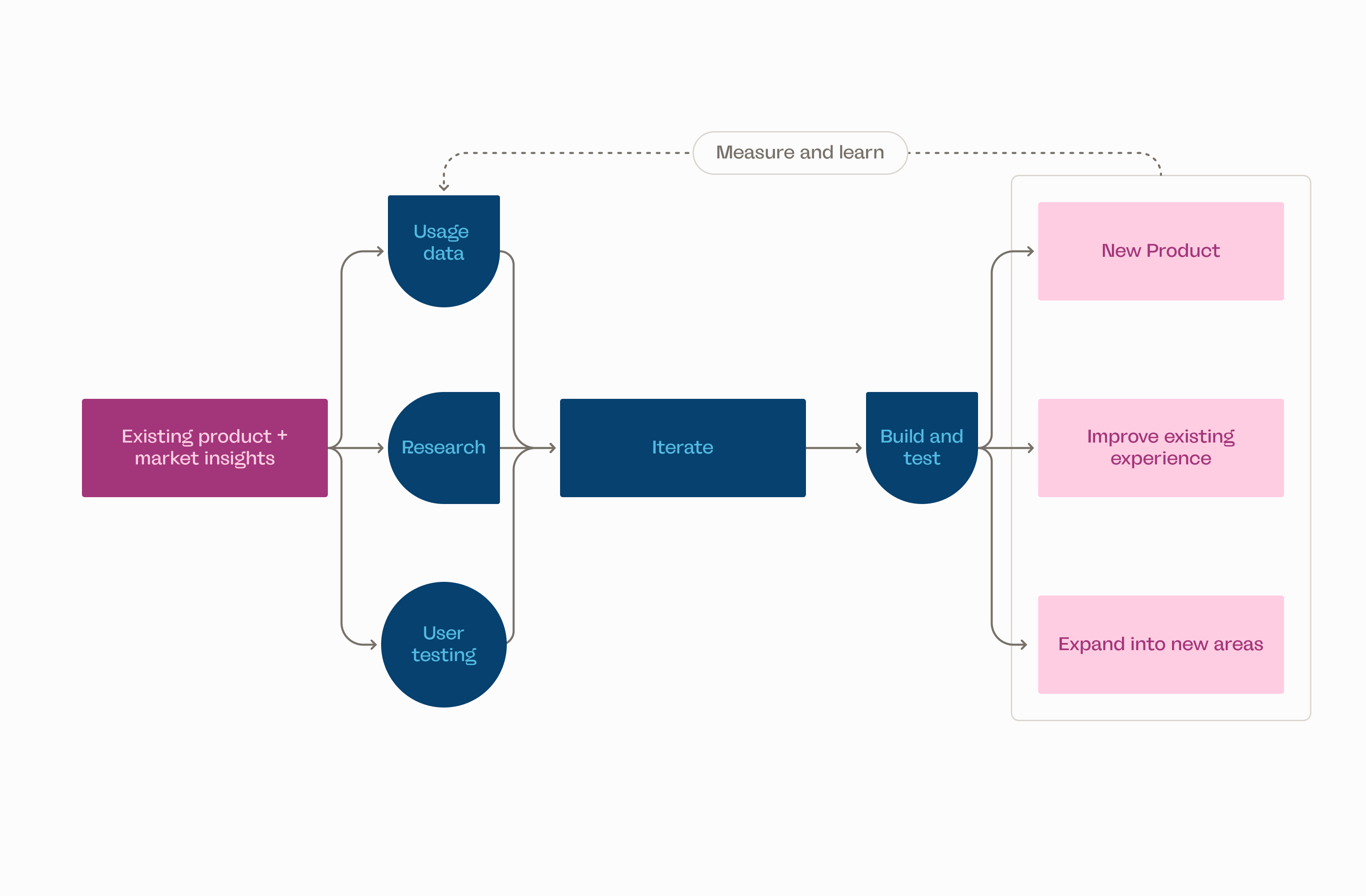
We embedded user research within the product-development process rather than treating it as a separate discovery phase.
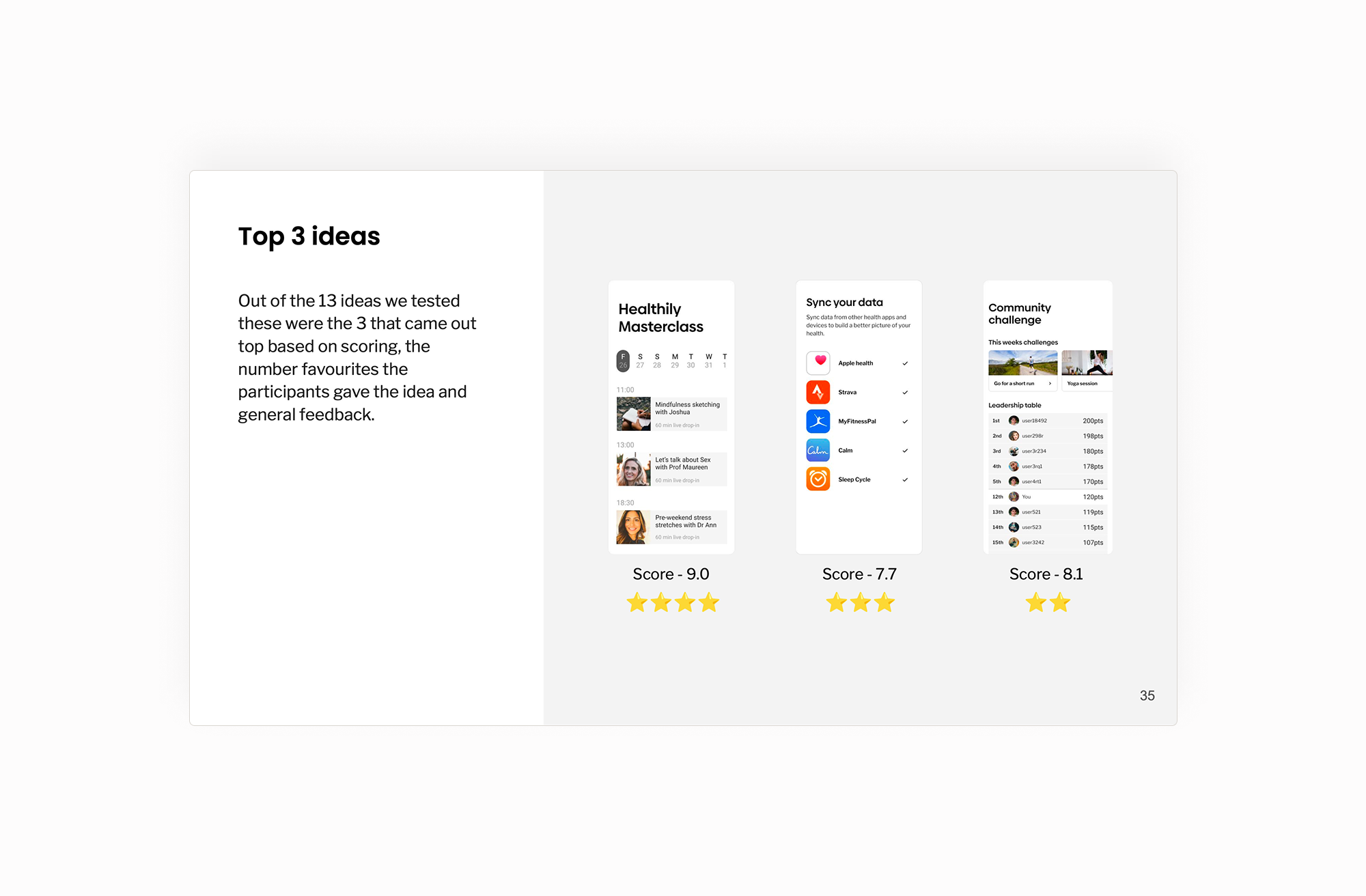
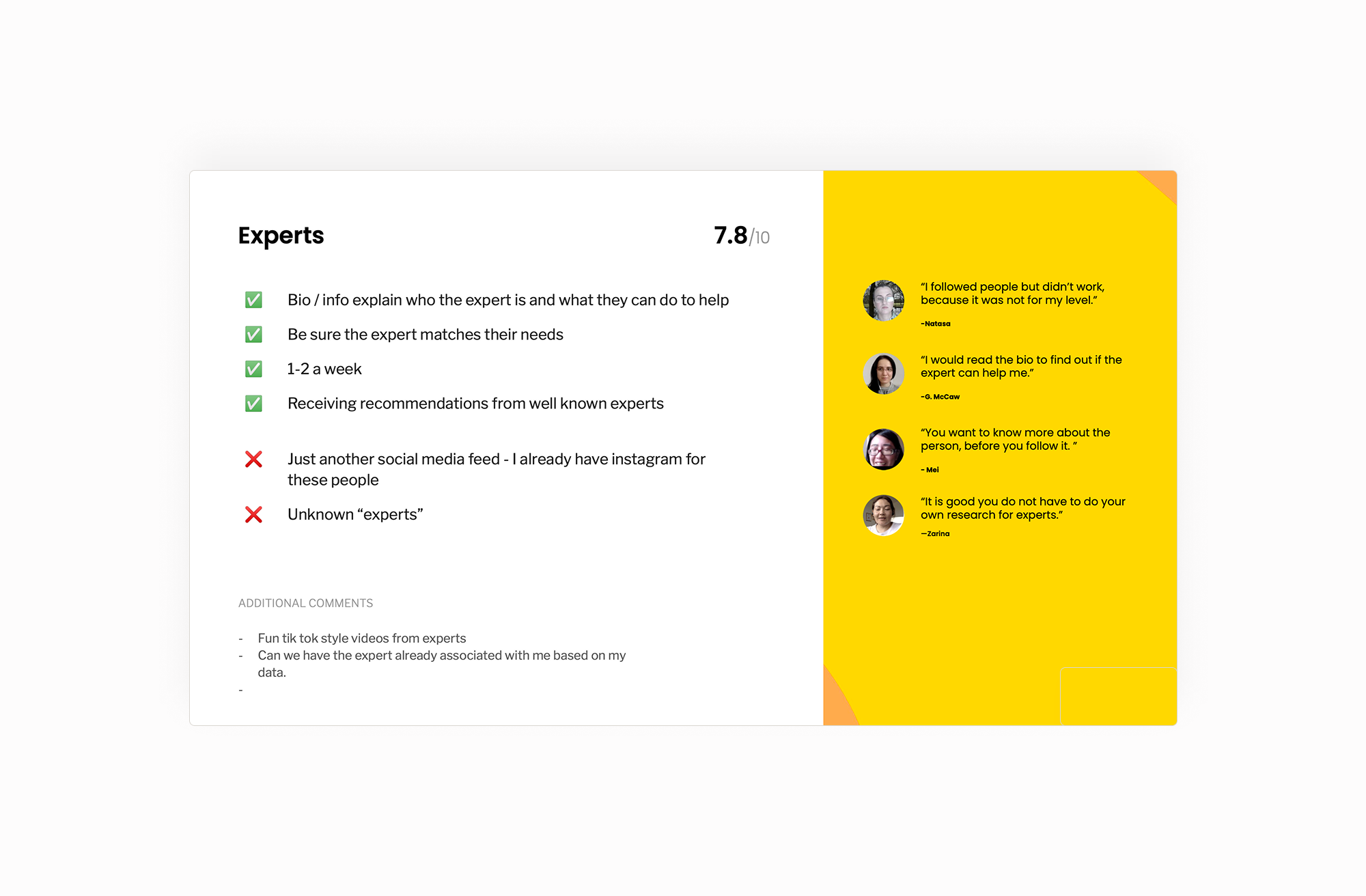
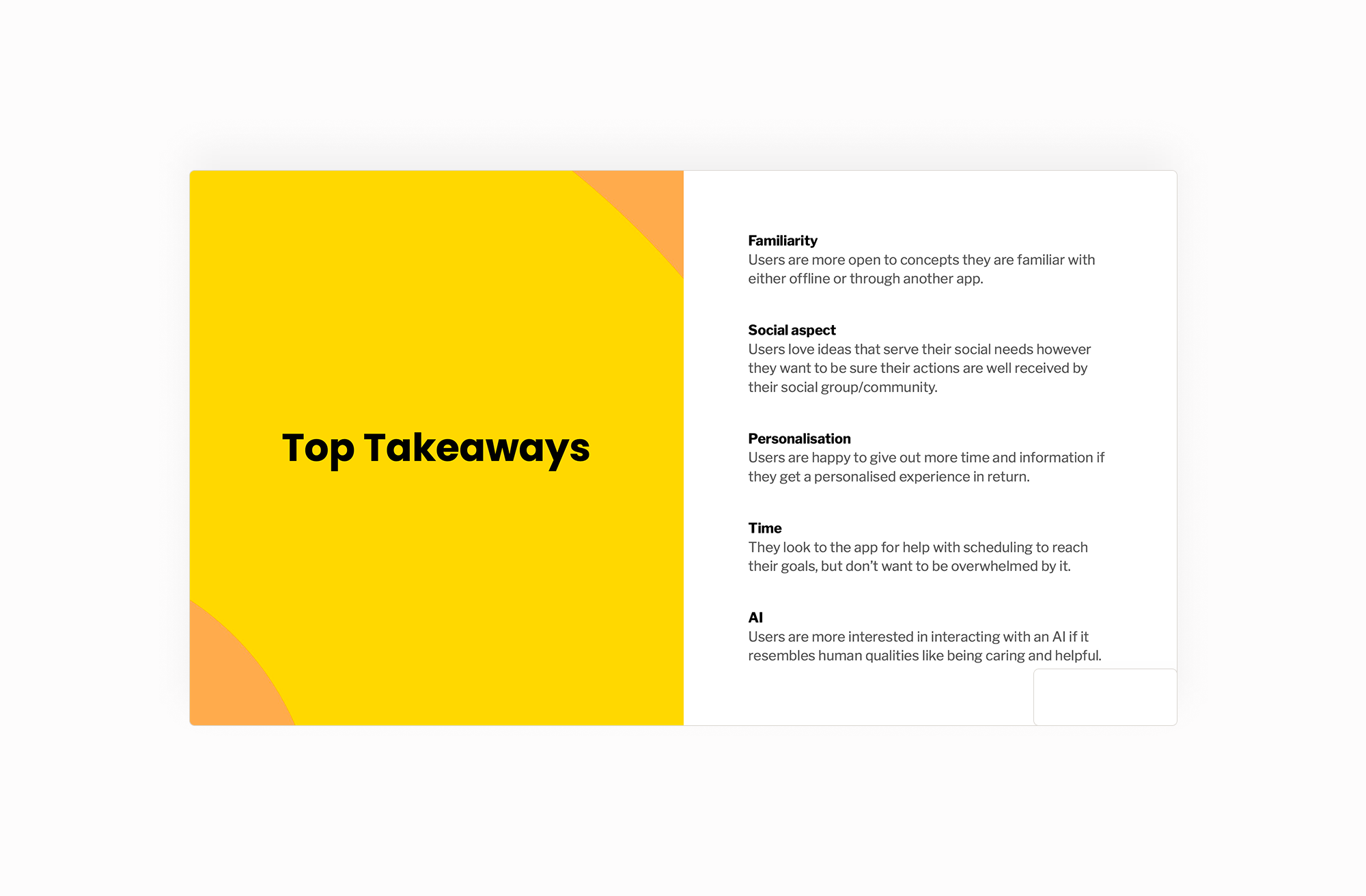
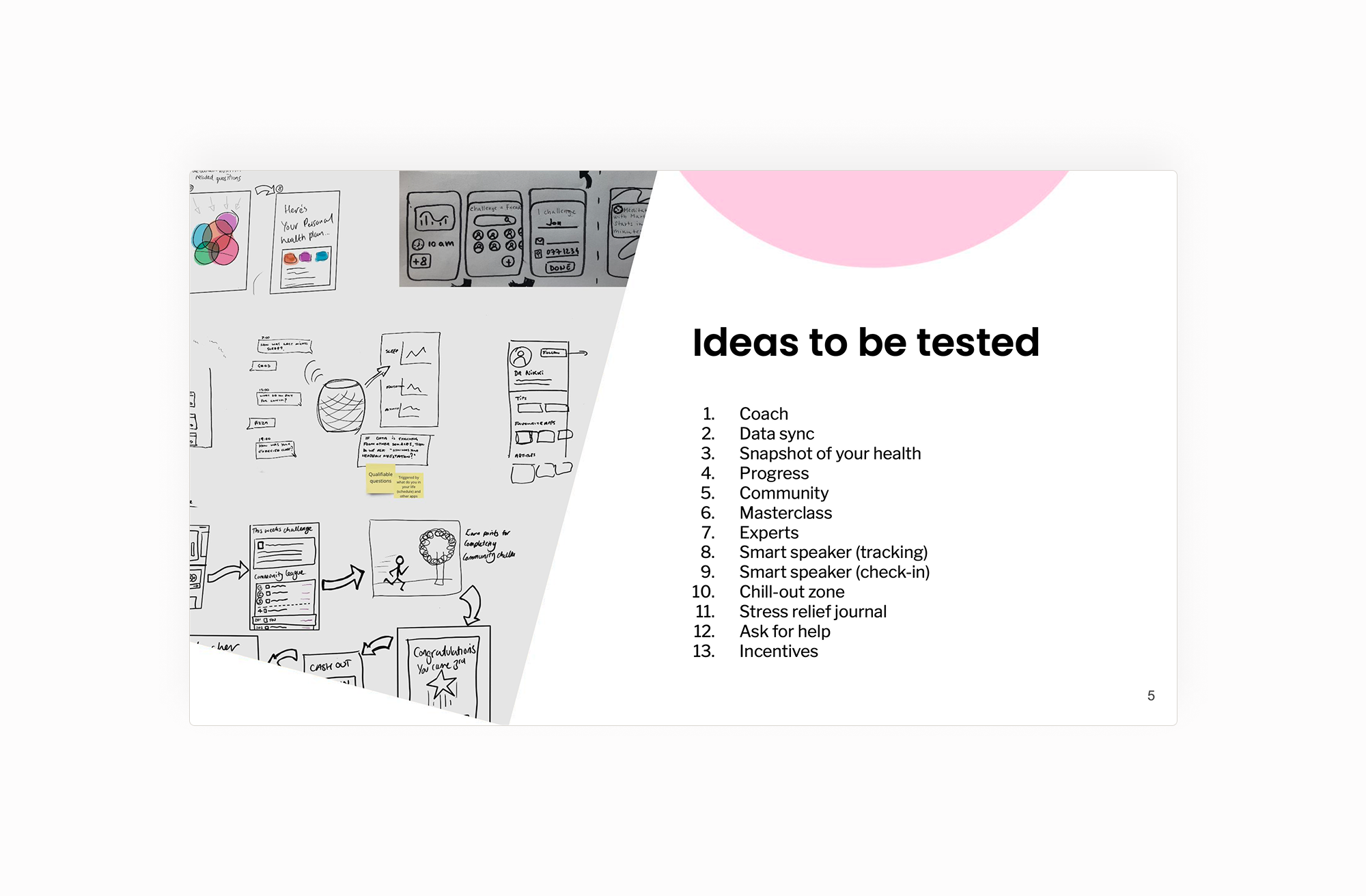
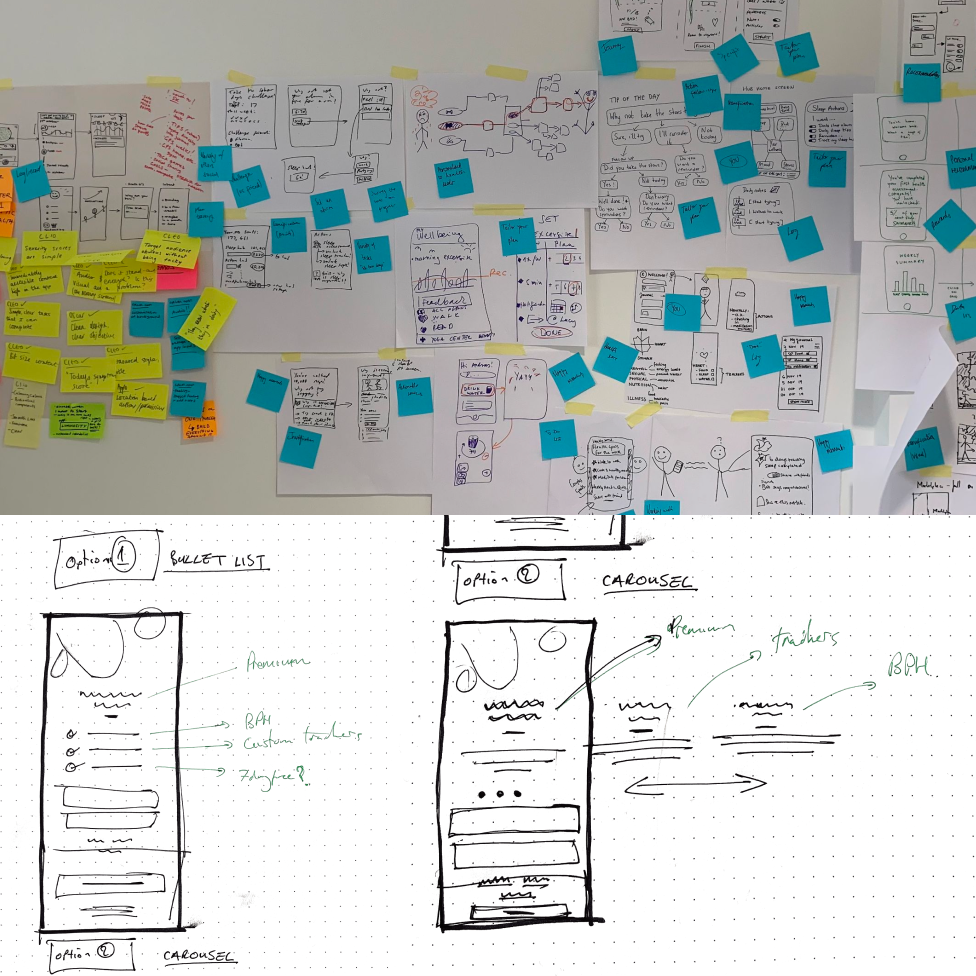
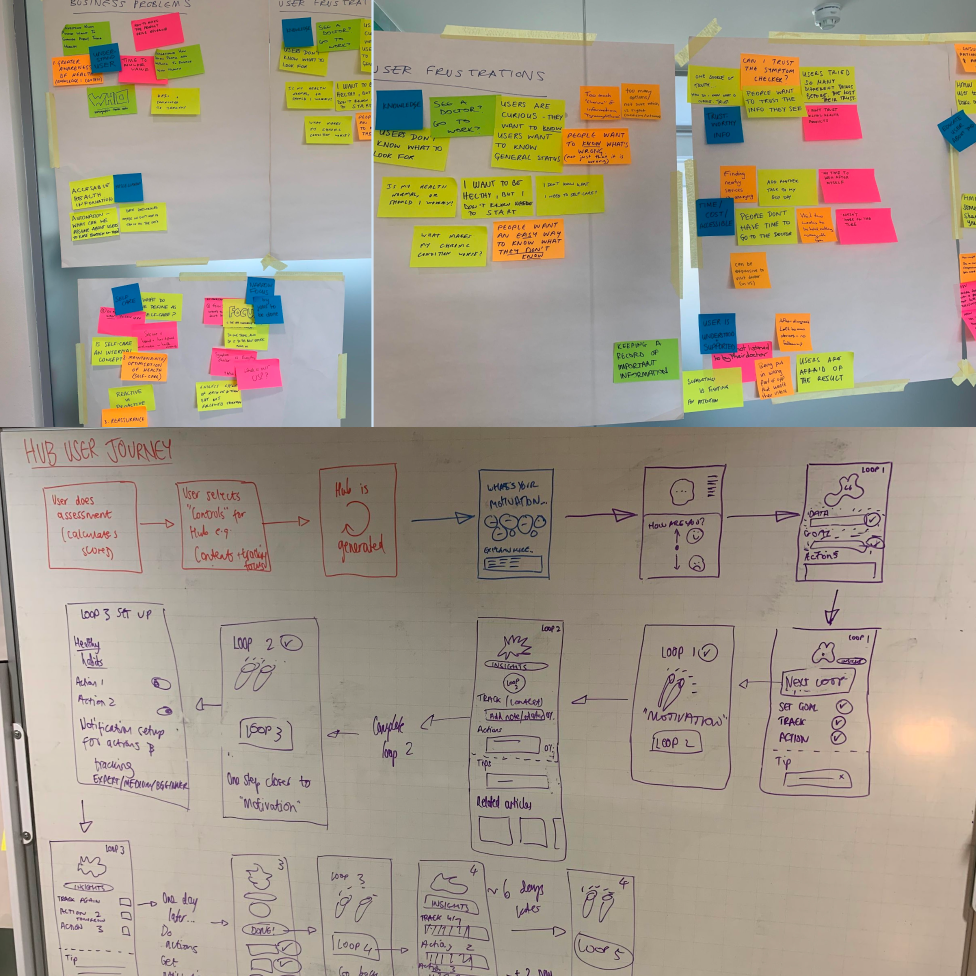
Across the period, we ran more than 50 user interviews and usability-testing sessions. These helped teams test early concepts, understand changing health behaviours and refine products before committing significant engineering time.
Frameworks including Jobs to be Done, the Kano model and behavioural-design principles gave teams different ways to evaluate opportunities. However, the framework was never the outcome. Its purpose was to help us connect user needs, clinical responsibility and commercial value when deciding what to build.
When the COVID-19 pandemic began, people urgently needed clear, trustworthy and accessible health information.
We quickly created a dedicated content hub to help people understand symptoms, find reliable guidance and navigate rapidly changing information. The work required close collaboration between design, product, engineering, medical and content teams, with continuous research helping us understand what people needed as the situation evolved.
Healthily received UserTesting’s 2020 Pivot Award for outstanding agility and adaptation during COVID-19 in recognition of this response.
During this period, Healthily expanded from an Android-only experience to a product available across Android, iOS and web.
We launched more than 15 new app features, introduced two paid product experiences and completed over 30 releases across the app and website.
The app’s user base grew sixfold, while the web platform reached four million monthly active users. The wider team also grew by more than ten people, requiring our design practices and systems to scale alongside the product.
The work was not only about shipping more. It was about creating the foundations that allowed a larger organisation to continue learning, designing and releasing with greater consistency.
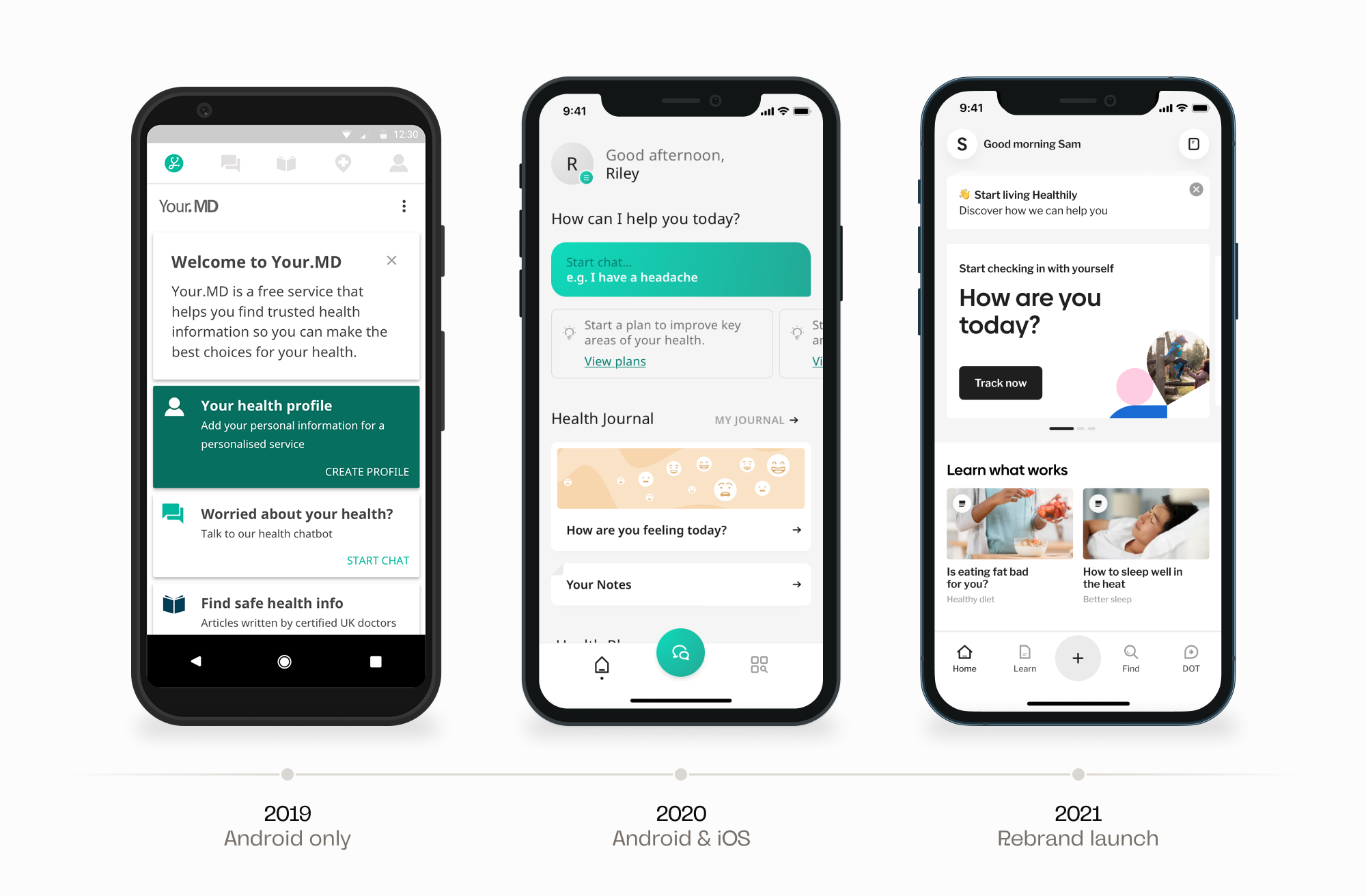
Across two years, we helped transform Healthily from an Android-first symptom checker into a multi-platform health experience serving millions of people.
The rebrand gave the company a clearer identity. The product work turned that identity into something useful and coherent. The design system and squad model gave teams a foundation they could continue building on.
For me, the project demonstrated that scaling design is not simply a matter of adding more designers or components. It means creating a shared vision, making research part of delivery and giving cross-functional teams the tools and trust to produce good work together.


